
More Than a “Poster”: Phoebe Chapman on Being a Woman in Tech
More Than a “Poster”: Phoebe Chapman on Being a Woman in Tech
When Phoebe Chapman began her career as an apprentice software engineer over six years ago, she hadn’t studied computer science at A level. She hadn’t followed the traditional university route. And she certainly didn’t describe herself as confident.
Today, she is a Senior Software Engineer, leading a team, mentoring other women entering the industry, and championing visibility in what remains a male-dominated space.
Phoebe’s journey, through a Tech Industry Gold-accredited Digital & Technology Solutions Professional (DTSP) apprenticeshipwithThe Open University, is not just a story of career progression. It’s a story of confidence built in real time, of learning out loud, and of choosing to say yes to opportunity.Starting without a “traditional” background
Phoebe entered tech without a formal academic pathway in computing.
“When I first started, I didn’t actually do computer science or anything at A level. During the interview process, I asked what were good websites or good places to look to teach me coding basics, because then I could apply the basics to a lot of things.”
From day one, the learning curve was steep.
“When I started here, it was quite full on. I hadn’t done much coding before. I’d done the basics and then I got straight in working with everyone.”
Over time, she moved across teams, working on APIs, web development and legacy desktop applications. Today, she focuses on modern web technologies and integrating AI into applications, adapting alongside the industry itself.
“AI wasn’t as big when I first started. To see that suddenly ramp up quite a lot, I’m still having to adapt now.”
That adaptability has become one of her defining strengths.
Transforming from a quiet apprentice to a team leader
Looking back, Phoebe is clear about what she would tell her younger self:
“Don’t be afraid to ask questions. Nothing is a silly question. Always ask for help. Always be a yes person. Don’t say no to opportunities because then that closes doors off.”
In her early days, she describes herself as shy and hesitant to seek support. She tried to figure things out independently, a habit many early-career professionals, particularly women in tech, will recognise.
As her technical skills strengthened, her confidence followed. She became known internally as a subject matter expert in a key documentation area. Other teams began approaching her for advice.
“That’s when I knew. People know about me now.”
That sense of belonging, of being recognised not just as an apprentice but as a professional, marked a turning point.
Today, she leads a team and manages others. A responsibility she once didn’t imagine for herself.
“When I first started, I was really shy. Now I’m leading a team and I manage people, which I didn’t think I would be doing.”
Women in Tech: Visibility beyond the poster
When asked what it means to make a difference in a male-dominated industry, Phoebe is thoughtful but clear. She does not romanticise it.
“It’s still very male oriented and more women should get into tech.”
However, she believes representation must go beyond visibility campaigns alone.
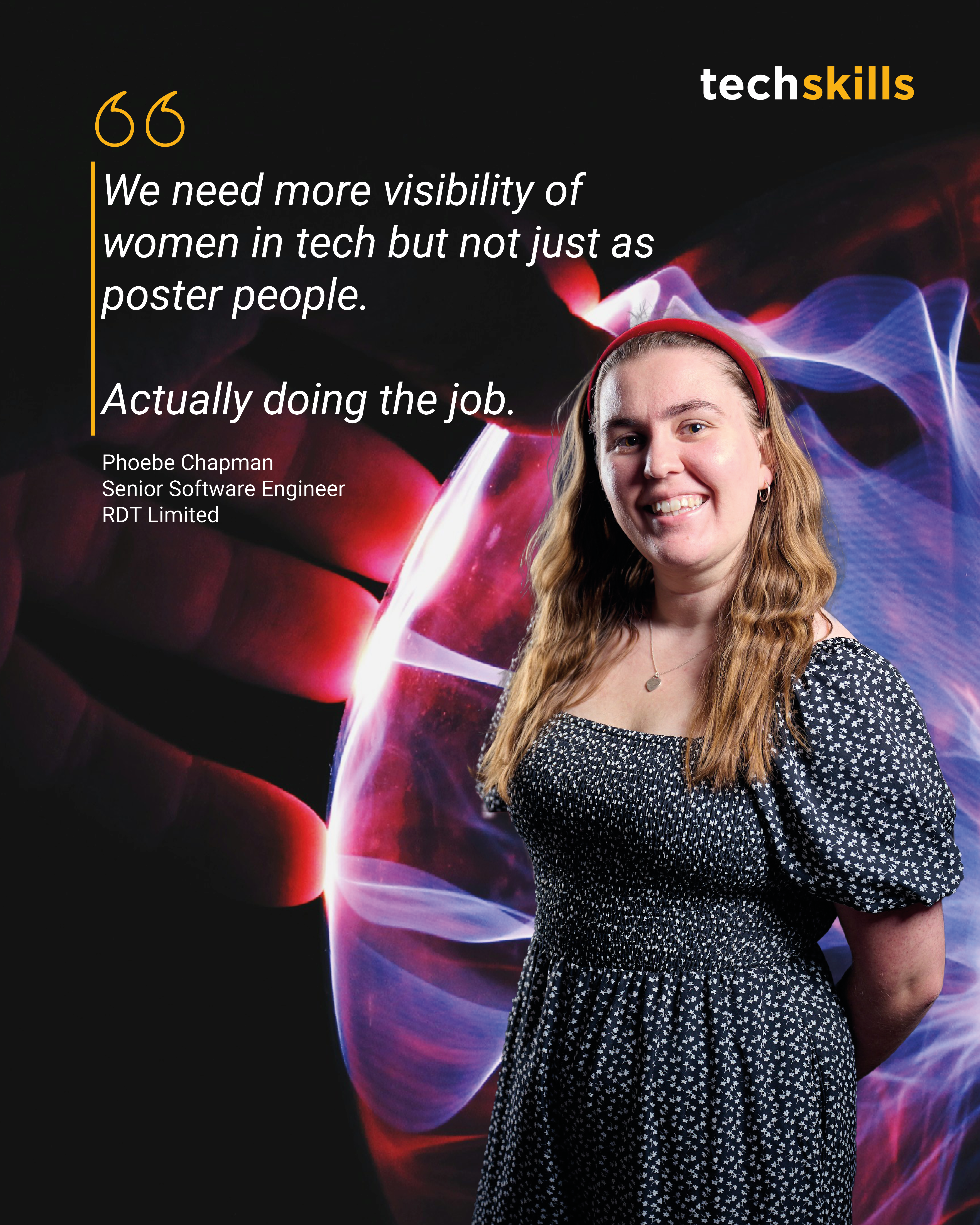
“We just need more visibility of women in tech but not just as poster people. Actually, doing the job.”
As someone now mentoring other female apprentices, she understands the power of everyday representation.
“When I found out we were taking on some girls, I was like, yes, I’ll mentor you. Obviously, I’d do that for anyone, but where there aren’t many women, it just helps.”
Meaningful inclusion, in her view, isn’t about numbers alone. It’s about everyday accessibility, early outreach, and showing young women that tech is not an abstract space, it’s a viable, welcoming career path.
“If these girls see other girls in the industry, they don’t feel scared to enter it.”
Advocating for yourself in a male-dominated industry
One of the most honest parts of Phoebe’s story is her reflection on self-advocacy.
To progress from Apprentice Software Engineer to Software Engineer, and then to Senior Software Engineer, she had to build business cases for her own promotions, mapping skills, knowledge and impact.
“I’ve often had the thing where I underplay myself. So, I’m trying to push myself enough to advocate for myself.”
She also acknowledges something many women quietly experience:
“I don’t want to say it’s more of a woman thing, but I’ve definitely noticed men are a lot more confident in bigging themselves up.”
Phoebe’s advice to women entering or progressing within tech?
“Don’t be afraid to big yourself up. Worst case, you can learn on the job when you get the job.” “Especially in this male-dominated industry, we’ve got to just know we know this. We are doing this.”
And when stepping into leadership roles:
“Don’t let anyone tell you that you shouldn’t be there. You’re there for a reason.”
Confidence, she learned, is evidence, not arrogance.
The power of a degree apprenticeship
Phoebe chose a degree apprenticeship with The Open University for both practical and personal reasons.
She describes herself as a hands-on learner. Traditional lectures didn’t appeal. The flexibility of the OU model, combined with real workplace experience, suited her learning style.
“I’m better learning on the job and visually seeing the code.”
The flexibility of the programme allowed her to balance assignments and work demands.
“If I needed a whole week of study days because I had an assignment coming up, it was fine. They knew they’d taken apprentices on to study and do work at the same time.”
Crucially, the curriculum aligned with real-world practice. Modules on methodologies such as Agile and Waterfall could be directly mapped onto her workplace experience.
“That module was quite easy for me because we do this at work. I could pin it all together.”
The end-point assessment allowed her to deliver a piece of work that benefited her employer while demonstrating the full software development lifecycle, technical, analytical and business-focused.
And in a competitive job market, she sees the long-term advantage clearly.
Leading without having all the answers
One of the most testing periods of Phoebe’s career came when she moved into managing a team in an unfamiliar technical area.
“All the other developers had been working on it for a couple of years. My confidence felt hit because I was constantly asking them questions.”
Imposter thoughts surfaced. Was she good enough to lead?
Phoebe’s solution was to challenge and reframe her internal narrative.
“I had to keep telling myself, it’s a new area of code. Anyone new would have these questions. Don’t panic.”
A year later, she feels grounded in that role.
“People come to me now asking questions. So, I feel I’m alright now.”
A voice within the tech industry gold community
Phoebe’s journey reflects what Tech Industry Gold accreditation is designed to support: employer-aligned learning, real-world application, and progression pathways that don’t require a single “traditional” route into tech.
But beyond the structure of the programme, her story highlights something equally important, the power of women identifying voices speaking openly about growth, confidence and visibility.
Women in tech need longevity, authority and ownership. They need to see women not only entering the industry, but staying, progressing and leading.
Phoebe’s message to women considering a career in tech?
“Even if you don’t think you’ve got the skills, try and apply anyway.” “You’re there for a reason.”
From apprentice to senior leader, from self-doubt to self-advocacy, Phoebe Chapman’s journey is a powerful reminder that representation in tech is not about perfection.
It’s about showing up, asking questions, saying yes and bringing others with you.